
In coastal Florida, flooding is not an abstract risk. It is a known variable that comes with waterfront living, proximity to the Gulf, and the lifestyle many buyers are intentionally seeking. After major storm events, flooded homes often enter the market at pricing that causes hesitation, confusion, and sometimes opportunity for buyers who understand how the process actually works.
Purchasing a flooded home and rebuilding it is not for everyone. But for the right buyer, with the right guidance, it can be a strategic way to create a home that fits your lifestyle, your priorities, and often your long-term financial goals better than buying a fully renovated property at full market pricing.
This guide walks through what buyers should know about flooded homes in coastal Florida, including the 50% rule, permitting realities, return on investment, and how to evaluate whether a property makes sense before moving forward.
Understanding Florida’s 50% Rule (Substantial Damage Rule)
One of the most important concepts when purchasing or rebuilding a flooded home is Florida’s Substantial Damage Rule, commonly referred to as the 50% rule.
In simple terms, if the cost to repair a home exceeds 50% of the home’s structure value, not including land, the property is considered substantially damaged. Once that threshold is crossed, the home must be brought into compliance with current floodplain regulations. This may include elevation requirements, construction standards, or additional improvements that would not otherwise be required.
The key point many buyers and homeowners do not realize is that the structure value used in this calculation is typically assigned by the county property appraiser. In some cases, that value may be outdated or understated relative to actual replacement cost.
Increasing the Structure Value When It Matters:
If repair estimates exceed what the county’s structure value allows, homeowners are not automatically stuck. There are legitimate paths to request a reassessment or adjustment, often supported by:
– A private appraisal (Actual Cash Value Appraisal – 50% Rule Appraisal)
– Contractor estimates detailing scope and materials
– Market data supporting current construction costs
Increasing the recognized structure value can materially change what is permitted and what rebuilding options are available. This step alone can make the difference between a project that feels restrictive and one that becomes manageable and strategic.
Permitting and Rebuilding a Flooded Home:
Rebuilding a flooded home is different from a standard renovation, particularly in coastal Pinellas County communities.
Permits are required for most repairs beyond basic cosmetic work. Electrical, plumbing, HVAC, drywall, framing, and structural improvements all fall under review. If the project triggers substantial damage thresholds, additional compliance requirements may apply.
Buyers should expect:
– Longer timelines than typical remodels
– Multiple inspections throughout the process
– Coordination between contractors, engineers, and municipal departments
While this can sound overwhelming, it is a defined process. With proper planning and realistic expectations, the path forward is far more predictable than many assume.
Return on Investment: Why Flooded Homes Can Make Financial Sense:
One of the most common reasons buyers consider flooded homes is value.
In many cases, the total all-in cost of purchasing and rebuilding a flooded home ends up below the market value of a comparable fully renovated, move-in-ready property. This pricing gap exists for several reasons:
– Time required to rebuild
– Perceived complexity and inconvenience
– Limited buyer pool willing to take on a project
For buyers with patience and a clear plan, that discount can translate into built-in equity and stronger long-term value. Market data, not guesswork, should always be used to evaluate this. I provide buyers with a detailed market analysis showing what the home would likely sell for if fully updated and move-in ready, based on current comparable sales.
Why Rebuilding Lets You Create the Home You Actually Want:
There is a meaningful difference between buying someone else’s renovation and rebuilding your own home.
When you rebuild, you control:
– Layout and flow
– Materials and finishes
– Systems and efficiency
– Priorities that matter to your lifestyle
Instead of paying a premium for finishes that may not align with your taste, rebuilding allows your investment dollars to go exactly where you want them. For many buyers, this results in a home that feels more intentional, more functional, and more satisfying long term.
My Personal Experience Rebuilding a Flooded Home:
This is not a process I only understand professionally. I purchased a flooded home myself and went through the rebuilding process from start to finish.
I have navigated structure valuations, permitting, inspections, contractor coordination, and the inevitable surprises that come with coastal properties. Check out before and after photos below so you can see what is truly possible.
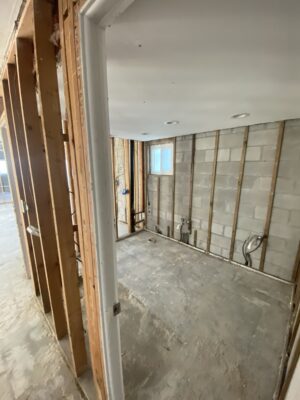
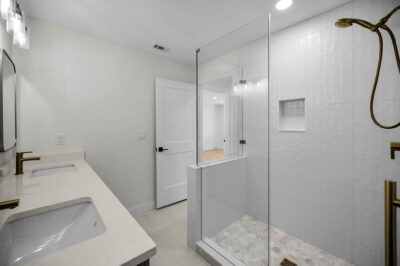


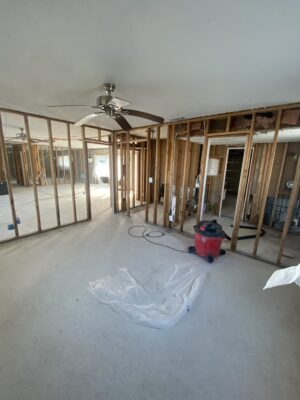
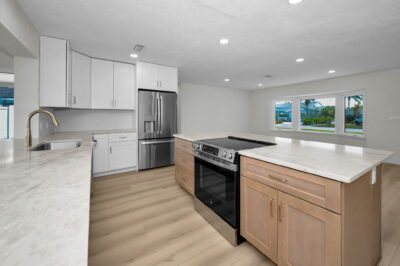
That firsthand experience shapes how I advise clients. It is grounded in reality, not theory, and it allows me to help buyers anticipate challenges before they become costly mistakes.
What to Look For When Evaluating Flooded Homes:
Not all flooded homes present the same opportunity. Buyers should evaluate several key factors before moving forward.
Building Envelope and Core Systems
– Roof age and condition
– Impact windows and doors
– Updated electrical, plumbing, and HVAC systems
Homes with recent envelope upgrades often offer a stronger foundation for rebuilding and future insurability.
Waterfront Infrastructure
If the home is on the water, pay close attention to:
– Seawall condition and age
– Dock and lift systems
– Electrical service to waterfront features
These components materially impact value.
Rental Restrictions and Zoning
For buyers considering investment or short-term use:
– Review local rental restrictions carefully
– Understand minimum lease terms and zoning limitations
– Confirm what is permitted today, not assumed
Rules vary significantly by municipality and can change the economics of a project.
Current Flooded Home Opportunities:
There are currently select opportunities on the market that offer buyers the ability to rebuild thoughtfully in strong coastal locations, including:
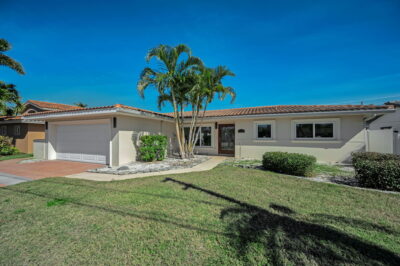
12155 5th St E, Treasure Island, FL – Waterfront home with impact windows and doors, newer 2023 composite dock and 10K lift
15812 3rd St E, Redington Beach, FL – Home previously used as a vacation rental that is a short walk to the beach
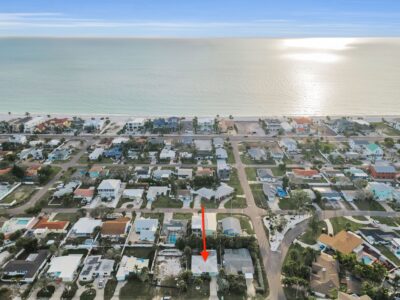
These properties are examples of homes where buyers can evaluate location, lot characteristics, and rebuilding potential rather than paying top-of-market pricing for someone else’s finished product.
Market Analysis and Exit Strategy:
Every flooded home purchase should be supported by data. Before my buyers move forward, I provide a market analysis showing:
– Current comparable sales of fully renovated homes
– Likely resale value once complete
– How total project costs compare to market pricing
This ensures decisions are made strategically, not emotionally, and with a clear understanding of both upside and risk.
Final Thoughts:
Buying and rebuilding a flooded home in coastal Florida is not about cutting corners or taking unnecessary risks. It is about understanding the rules, the process, and the market well enough to make informed decisions.
With the right guidance, flooded homes can offer buyers control, customization, and value that is increasingly difficult to find in established waterfront communities. If you are considering this path or simply want to understand whether it makes sense for your goals, I am always happy to walk through the data, the process, and the options available.
If you would like help evaluating a specific property or reviewing what a rebuilt home could realistically be worth, reach out anytime.