
Could Florida Property Taxes Change Forever? What the 2026 Ballot Measure Means for Homeowners
Florida homeowners may see a major property tax proposal on the November 2026 ballot, and it is already generating a lot of questions.
Some headlines suggest Florida is eliminating property taxes. Others warn of potential impacts on local services. The reality is somewhere in between.
Here is what homeowners need to know.
What Is Florida’s 2026 Property Tax Amendment?
The proposed constitutional amendment would significantly increase the homestead exemption for primary Florida residences.
The goal is to reduce the property tax burden on homeowners, particularly those who have seen rising home values, insurance costs, and overall expenses.
The proposal does not eliminate property taxes.
Homeowners would still pay school district taxes, special assessments, and taxes on any value above the exemption amount.
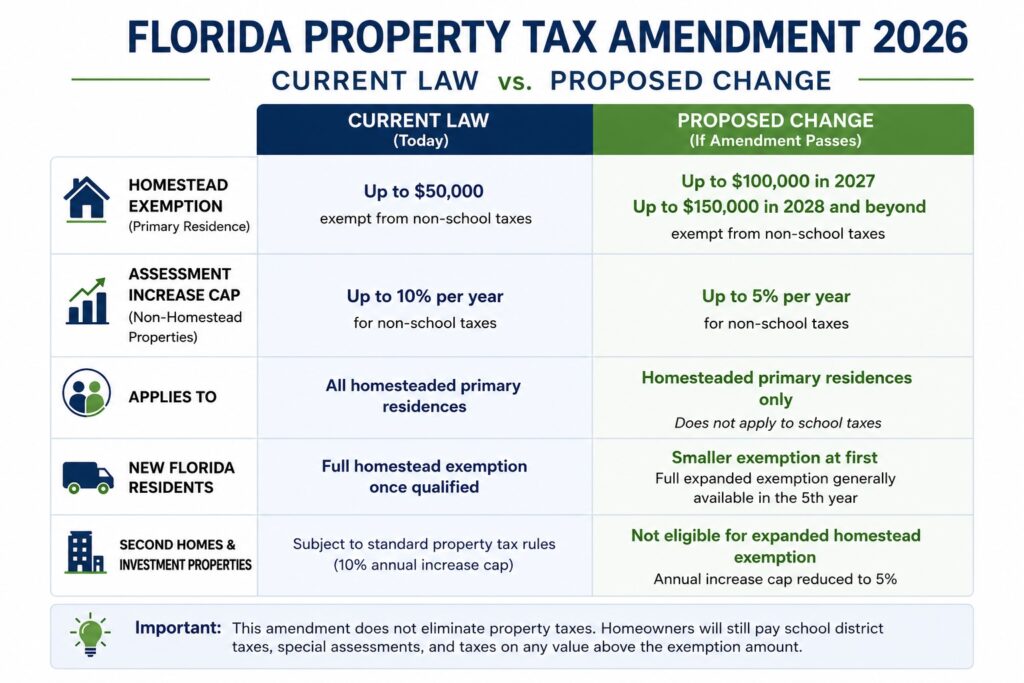
Current Florida property tax law compared with the proposed 2026 constitutional amendment. The chart highlights potential changes to homestead exemptions, assessment caps, and eligibility for primary residences, second homes, and investment properties.
How Much Could Homeowners Save?
The exact savings would depend on:
- Your home’s assessed value
- Your local tax rates
- Whether the property is homesteaded
For many homeowners, a larger exemption could reduce the non-school portion of their annual property tax bill.
The higher the taxable value of your home, the greater the potential benefit.
Who Benefits the Most?
The biggest winners would likely be homeowners who already have a Florida homestead exemption.
These homeowners could qualify for the expanded exemption sooner and potentially see meaningful tax savings beginning in 2027.
This could be especially valuable for:
- Retirees
- Longtime Florida residents
- Families on fixed incomes
- Homeowners in areas where property values have risen significantly
What About New Florida Residents?
This is one of the most overlooked parts of the proposal.
Under the current language, homeowners who establish Florida residency after January 1, 2027, may not receive the full expanded exemption immediately.
Instead, they could start with a smaller benefit and gradually qualify for the larger exemption over time.
For buyers considering a move to Florida, this is an important detail to watch.
Even with this proposed change, Florida continues to attract new residents because of its favorable tax environment, year-round outdoor lifestyle, and coastal communities. If you are considering a move to the area, be sure to read my article, Why Florida’s West Coast is the Best Coast, where I share why so many buyers continue choosing Tampa Bay and Florida’s Gulf Coast.
What About Second Homes and Investment Properties?
The expanded homestead exemption would apply only to primary residences.
That means:
- Second homes would not qualify
- Vacation properties would not qualify
- Rental and investment properties would not qualify
However, some non-homestead properties could benefit from a reduction in the annual assessment growth cap from 10% to 5%.
What Are the Concerns?
While many homeowners support tax relief, critics are raising questions about how local governments would replace lost revenue.
Property taxes help fund services such as:
- Police and fire protection
- Roads and infrastructure
- Stormwater systems
- Parks and libraries
- Hurricane recovery efforts
Communities throughout Tampa Bay and the Gulf Beaches rely heavily on these services, particularly in coastal areas where infrastructure and storm recovery costs can be significant.
What Could This Mean for Tampa Bay Homeowners?
For homeowners in St. Petersburg, Treasure Island, St. Pete Beach, Tierra Verde, and surrounding Tampa Bay communities, the amendment could lower a portion of annual property taxes.
At the same time, local governments may need to determine how essential services continue to be funded if property tax revenue decreases.
The long-term impact will likely vary from one community to another.
Questions We Still Do Not Have Answers To
While the proposal outlines the framework for these changes, several important questions remain:
- How much revenue could cities and counties lose?
- Would local governments need to increase millage rates or fees to offset those losses?
- Could services such as roads, drainage, stormwater management, and public safety be affected?
- How might the proposal impact future home values and buyer demand?
- Could lawmakers make additional changes before or after implementation?
As we move closer to the November 2026 election, these are the issues homeowners, buyers, sellers, and investors should continue watching.
What Happens Next?
Florida voters are expected to decide on the amendment in November 2026.
If approved, the expanded exemption would begin in 2027 and increase again in 2028.
Additional implementation details would likely be addressed through future legislation.
Key Takeaways
- Florida is not voting to eliminate property taxes.
- The proposal would expand the homestead exemption for primary residences.
- Existing Florida homeowners with homestead exemptions could benefit the most.
- New Florida residents may not receive the full expanded exemption immediately.
- Second homes and investment properties would not qualify for the expanded homestead exemption.
- Questions remain about how local governments would replace lost revenue.
- The amendment could have a meaningful impact on homeowners, buyers, investors, and local communities across Tampa Bay and Florida.
As more details become available, homeowners should look beyond the headlines and understand how the proposal could affect their specific situation before casting their vote in November 2026.
As a local real estate professional serving St. Petersburg, Treasure Island, St. Pete Beach, Madeira Beach, Tierra Verde, and surrounding Tampa Bay communities, I will continue monitoring this proposal and sharing updates as new information becomes available.
If you are wondering how these potential changes could impact your home’s value or your future real estate plans, feel free to reach out.