
Florida’s Property Tax Amendment on the November 2026 Ballot: What Homeowners Need to Know
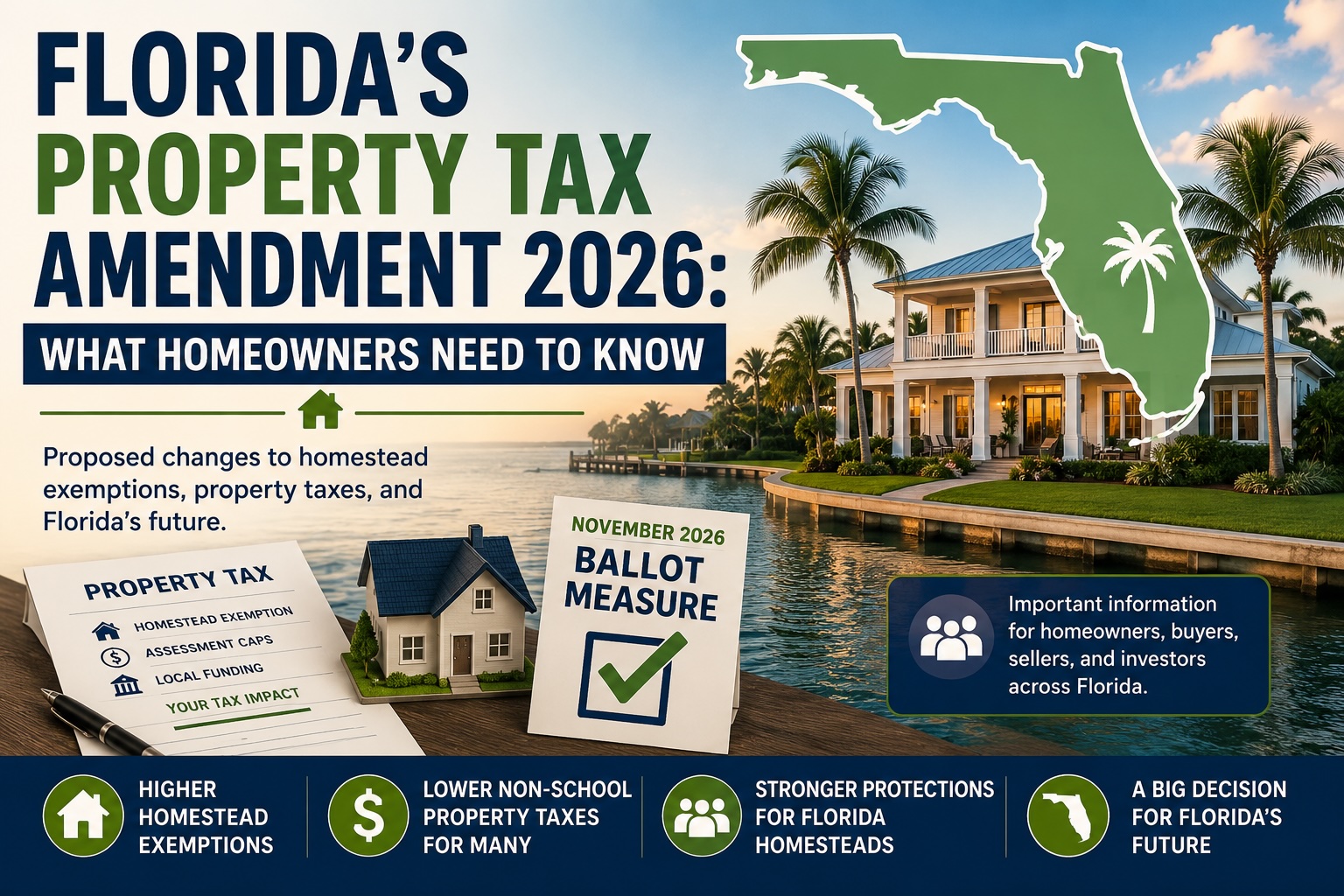
Florida homeowners have been hearing a lot about property taxes lately. Some headlines make it sound like Florida may be eliminating property taxes altogether. Others say the proposal could hurt local services. And somewhere in the middle are everyday homeowners simply trying to understand what this could mean for their tax bill, their home value, and their community.
So let’s break it down in plain English.
This article is not meant to tell you how to vote. My goal is to help you understand what is being proposed, who may benefit, who may not, and what questions still need answers before Florida voters decide in November 2026.
The 60-Second Version
Florida voters are expected to see a proposed constitutional amendment on the November 2026 ballot that would significantly expand the homestead exemption for primary Florida residences.
The proposal would not eliminate all property taxes right away.
Instead, it would increase the non-school homestead exemption to:
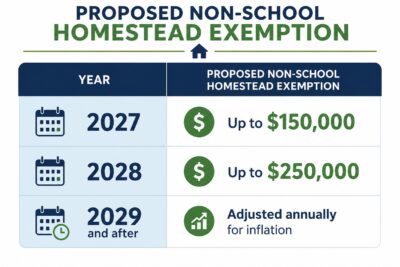
The proposed Florida property tax amendment would increase the non-school homestead exemption to $150,000 in 2027, $250,000 in 2028, and then adjust it annually for inflation beginning in 2029.
This exemption would apply to homesteaded primary residences, but not to school district taxes.
What Is on the November 2026 Ballot?
The proposed amendment would change Florida’s Constitution in several ways.
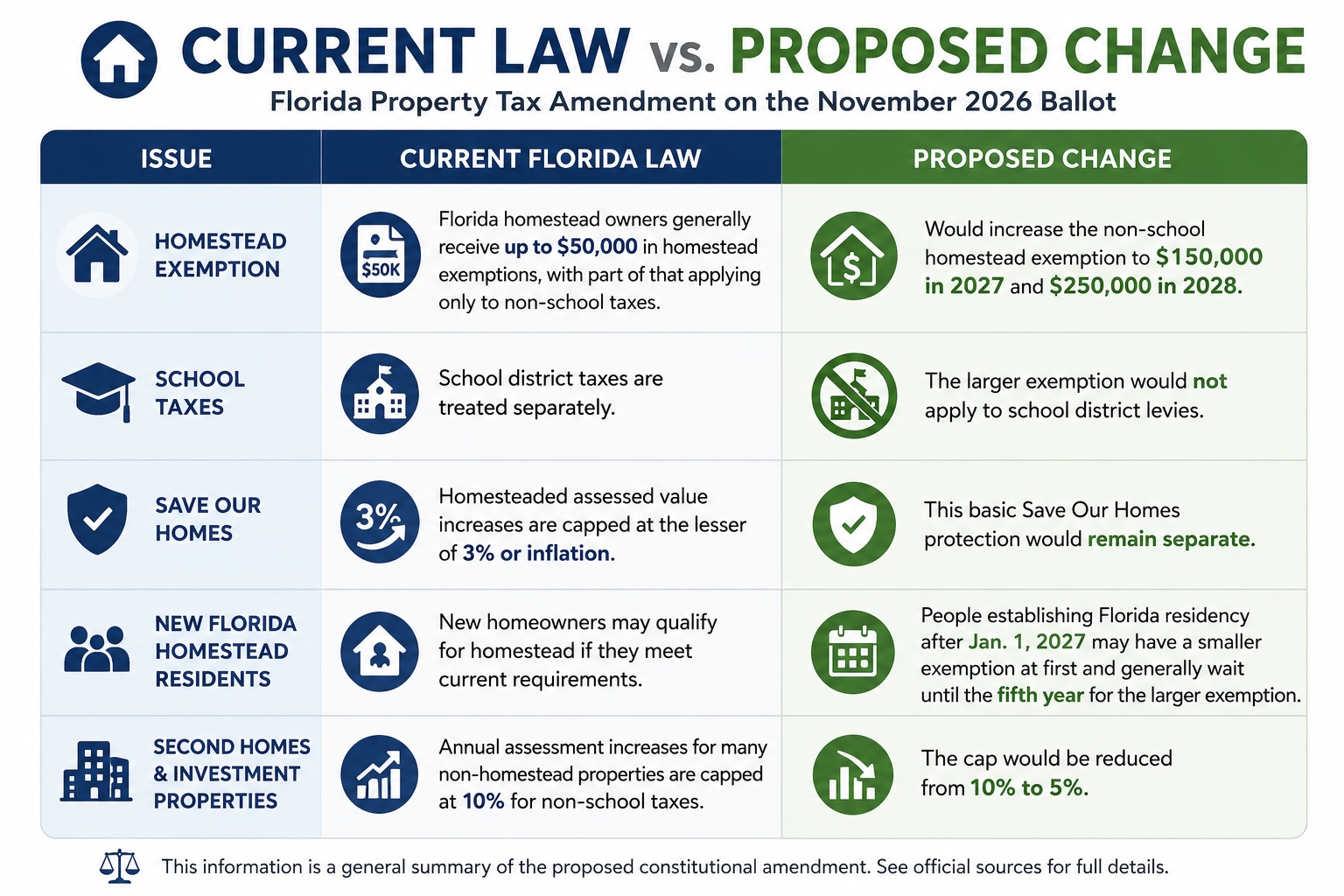
Side-by-side comparison of current Florida property tax laws and the proposed changes that could appear on the November 2026 ballot.
For homeowners in St. Petersburg, Treasure Island, St. Pete Beach, Madeira Beach, Tierra Verde, and throughout Tampa Bay, understanding these proposed changes is important because the amendment could affect both property tax bills and local government funding for community services.
Will Florida Eliminate Property Taxes?
Not immediately.
This is one of the biggest points of confusion.
The proposal is often discussed as a step toward eliminating property taxes for Florida homeowners, but the actual ballot measure does not simply erase property taxes in 2027.
If it passes, qualifying homesteaded homeowners would still likely pay some property taxes, including school district taxes, special assessments, and any remaining taxable value above the exemption.
Why Lawmakers Say the Change Is Needed
Supporters argue that property taxes have become a growing burden for Florida homeowners, especially as home values, insurance costs, maintenance costs, and everyday expenses have increased.
Their main argument is simple: even if you own your home, rising property taxes can make it more expensive to stay in it.
Arguments Supporters Are Making
1. Lower the cost of homeownership
For many homesteaded homeowners, a larger exemption could reduce the non-school portion of the property tax bill.
2. Help long-time Florida residents stay in their homes
This may be especially meaningful for retirees, families on fixed incomes, and homeowners in areas where property values have risen sharply.
3. Give homeowners more predictability
A larger exemption could make the tax burden feel more manageable, particularly when paired with Florida’s existing Save Our Homes protections.
Concerns Critics Are Raising
Critics are not necessarily arguing that homeowners do not need relief. Their concern is what happens on the other side of the equation.
Property taxes help fund local services, including public safety, infrastructure, stormwater systems, parks, libraries, and local government operations.
1. How will local governments replace lost revenue?
If cities and counties collect less in property taxes, they may need to cut services, raise fees, increase millage rates where allowed, or shift costs elsewhere.
2. Will this create a two-tiered system?
Existing Florida homestead owners may receive a larger benefit sooner, while future residents and first-time homebuyers may wait longer.
3. Could costs shift to renters, investors, or businesses?
Even though the proposal reduces the non-homestead assessment cap from 10% to 5%, critics point out that millage rates or other costs could still rise.
What It Means for Existing Florida Homeowners
If you already own and homestead your Florida home by the required date, you may be among the clearest potential beneficiaries.

Example: Longtime Homesteaded Homeowner
Let’s say you own a primary residence in St. Petersburg or Treasure Island and already have homestead.
If the amendment passes, more of your assessed value could be exempt from non-school property taxes beginning in 2027 and increasing again in 2028.
That could lower part of your tax bill. But it does not mean your entire tax bill goes away.
What It Means for Future Florida Residents
This part is important.
If someone moves to Florida and establishes residency or homestead after January 1, 2027, they may not receive the full expanded exemption right away.
Instead, they may receive a smaller exemption initially and generally become eligible for the larger exemption beginning in the fifth year.
Many people continue relocating to Florida because of the lifestyle, climate, and tax advantages compared to other states. (You can learn more about why so many buyers continue choosing Tampa Bay in my article, “Why Florida’s West Coast is the Best Coast.”)
Example: Buyer Moving to Florida in 2027
A buyer moves from another state to Tampa Bay in 2027 and buys a primary residence.
Under the proposal, that buyer may not receive the same full exemption as someone who already had Florida homestead before the cutoff date.
What It Means for Second Homes and Investment Properties
Second homes, vacation homes, and rental properties are not homesteaded primary residences.
That means they would not receive the expanded homestead exemption.
However, the proposal would reduce the annual assessment growth cap for non-homestead residential and non-residential properties from 10% to 5% for non-school taxes.
Example: Beach Condo Used as a Second Home
A buyer owns a beach condo in Pinellas County but lives primarily in another state.
That condo would not qualify for the expanded homestead exemption because it is not the owner’s permanent residence.
Example: Investor-Owned Rental Property
An investor owns a rental home in St. Pete Beach.
The property would not receive the expanded homestead exemption. The owner may benefit from the lower assessment growth cap, but investors will want to watch future millage rates, fees, and operating costs closely.
What It Means for Tampa Bay and Gulf Coast Communities
This is where the conversation becomes very local.
In Tampa Bay, St. Petersburg, Treasure Island, St. Pete Beach, Madeira Beach, Tierra Verde, and the Gulf Coast communities, property taxes are only one part of the bigger affordability picture.
Homeowners here are also dealing with:
- Home insurance increases
- Flood insurance
- Storm repairs
- Elevated construction costs
- Aging infrastructure
- Drainage and stormwater needs
- Seawalls, roads, bridges, and beach-related maintenance
- Post-hurricane rebuilding issues
For homesteaded waterfront homeowners, the proposal could provide meaningful tax relief.
But coastal cities also rely on local revenue to pay for services that matter a lot in beach communities, including emergency response, drainage, flood control, road maintenance, permitting departments, and storm recovery.
Frequently Asked Questions
Will Florida eliminate property taxes in 2027?
No. The Florida property tax amendment being considered for the November 2026 ballot would not eliminate all property taxes in 2027. Instead, it would increase the homestead exemption for qualifying Florida homeowners on non-school taxes. Homeowners would still pay school taxes, special assessments, and taxes on any taxable value above the exemption.
What is the Florida property tax amendment on the 2026 ballot?
The Florida property tax amendment is a proposed constitutional change that would increase the homestead exemption for primary residences, reduce assessment growth caps for many non-homestead properties, and potentially pave the way for future property tax reforms. Florida voters are expected to decide on the measure in November 2026.
How much could Florida homeowners save if the amendment passes?
The amount varies based on a home’s assessed value, location, local tax rates, and exemptions. Homeowners with homestead exemptions would generally see greater savings than owners of second homes or investment properties.
Who benefits the most from the Florida property tax proposal?
Longtime Florida homeowners with homestead exemptions are expected to benefit the most because they would qualify for the larger exemption sooner than future Florida residents.
Will new Florida residents get the same tax break?
Not immediately. Under the proposal, homeowners who establish Florida residency after January 1, 2027, would generally receive a smaller exemption initially and would need to wait several years before qualifying for the larger exemption.
Does the Florida property tax amendment affect second homes?
Second homes would not qualify for the expanded homestead exemption because they are not primary residences. However, owners could benefit from a lower assessment growth cap on certain non-homestead properties.
Does the amendment affect rental properties?
Rental properties would not receive the expanded homestead exemption. However, the proposal could reduce the annual assessment growth cap from 10% to 5% for certain non-homestead properties.
How would the amendment affect Tampa Bay homeowners?
Tampa Bay homeowners with homestead exemptions could see lower non-school property taxes if the amendment passes. The impact would depend on assessed value, local tax rates, and future implementation decisions by state and local governments.
How would the amendment affect Gulf Coast and waterfront communities?
Gulf Coast and waterfront communities may feel the impact differently because many coastal cities rely on local property tax revenue to fund stormwater systems, drainage, roads, public safety, permitting departments, beach maintenance, and storm recovery efforts. Homeowners may benefit from tax relief, but local governments may need to evaluate how essential services are funded.
Could local government services be affected?
Possibly. Property taxes help fund services such as police, fire protection, roads, parks, libraries, drainage systems, and storm recovery efforts. Critics argue that reduced property tax revenue could create funding challenges for some communities.
What happens if the amendment fails?
If voters reject the amendment, Florida’s current property tax system would generally remain in place, including existing homestead exemptions and assessment caps.
What happens if the amendment passes?
If approved by voters, the expanded homestead exemption would begin in 2027, increase again in 2028, and be indexed for inflation beginning in 2029. Additional implementation details would likely follow through legislation and local government adjustments.
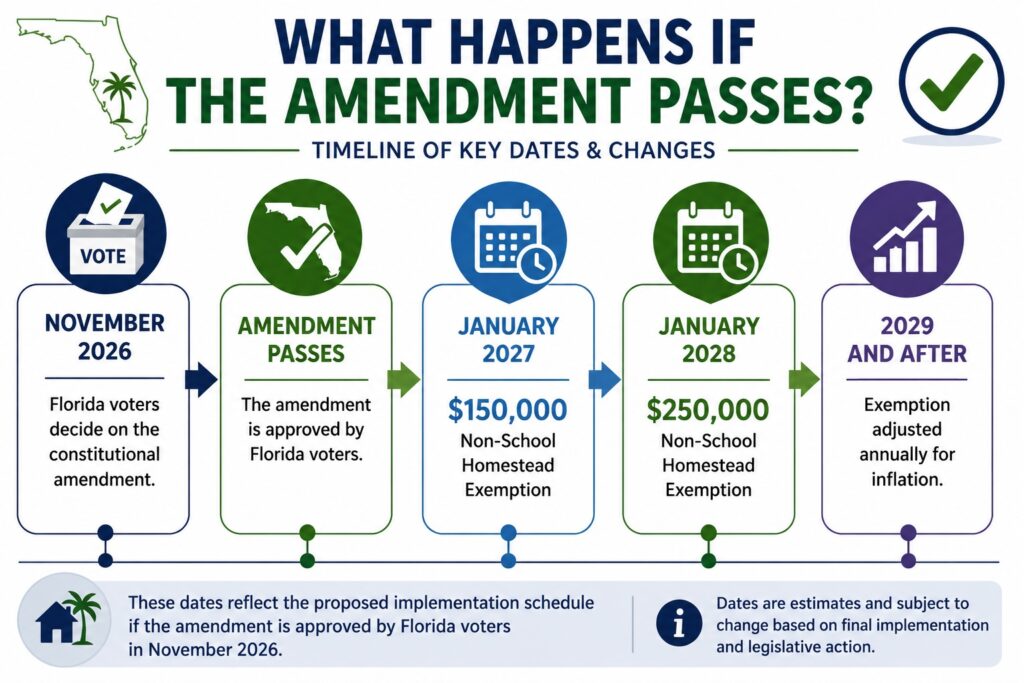
Key implementation dates if Florida voters approve the amendment.
Questions We Still Don’t Have Answers To
Even with the proposed language and early analysis available, there are still important questions Florida homeowners, buyers, sellers, and investors should continue watching.
- How much revenue would each Florida county, city, and municipality lose?
- Would local governments raise millage rates to offset revenue losses?
- Would service levels change in coastal communities with high infrastructure needs?
- Could future legislatures modify the exemption structure?
- How would school funding be affected indirectly, if at all?
- What impact could the amendment have on home values and buyer demand?
- How would this affect future Florida residents relocating after January 1, 2027?
- Would investors, landlords, or business owners see costs shift in other ways?
My Local Perspective as a Waterfront and Coastal Real Estate Professional
From a local real estate standpoint, I see both sides of why this issue matters.
Many homeowners are feeling squeezed. Even people who bought years ago and have strong equity are dealing with rising insurance premiums, repair costs, utility costs, and overall cost of living increases. Property tax relief could feel meaningful, especially for people who want to stay in their homes long term.
At the same time, our coastal communities have real needs. In places like Treasure Island, St. Pete Beach, Madeira Beach, Tierra Verde, and waterfront St. Petersburg neighborhoods, local services are not abstract. We rely on them for stormwater management, public safety, beach maintenance, permitting, roads, bridges, and post-storm recovery.
For buyers, sellers, and investors, this is not just a tax issue. It could become part of future affordability, demand, and relocation conversations.
A buyer moving to Florida in 2027 may look at this differently than a longtime homesteaded homeowner. An investor may look at it differently than a retiree. A coastal homeowner may look at it differently than someone inland.
That is why the most important thing right now is to understand the details and avoid relying only on headlines.
Key Takeaways
- Florida is not voting on a simple “eliminate all property taxes” proposal.
- The amendment would increase the non-school homestead exemption for qualifying primary residences.
- Existing Florida homestead homeowners may benefit sooner than future Florida residents.
- Second homes and investment properties would not receive the expanded homestead exemption.
- Non-homestead properties may benefit from a lower 5% assessment growth cap.
- Local government funding and services remain one of the biggest unanswered questions.
- For Tampa Bay and Gulf Coast communities, the impact could be especially important because of infrastructure, storm recovery, flood control, and public safety needs.