
Florida homeowners, keep an eye on your mailbox. Annual TRIM Notices are arriving around this time, and while this document may look like another tax bill, it is actually something you should review carefully before putting it aside.
A Florida TRIM Notice, officially called the Notice of Proposed Property Taxes, is not your final property tax bill. TRIM stands for Truth in Millage, and Florida law requires the notice to help property owners understand their proposed property values, exemptions, tax rates and estimated property taxes before final tax bills are issued. Your actual property tax bill generally arrives around November.
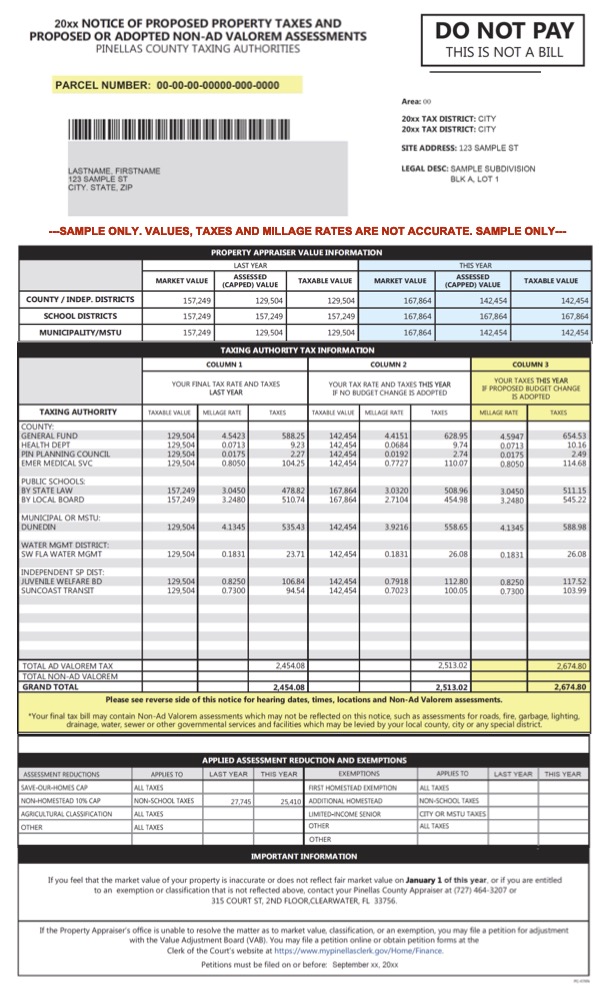
TRIM notice example
What Should You Look at on Your TRIM Notice?
Your notice contains a lot of information, but two numbers are especially important:
Just/Market Value: This is the Property Appraiser’s estimate of your property’s market value as of January 1 of the tax year.
Assessed Value: This is the value after applicable assessment limitations, such as Florida’s Save Our Homes cap, have been applied. Exemptions are then deducted from assessed value to arrive at taxable value.
For residential properties, the Pinellas County Property Appraiser considers comparable sales that occurred before the January 1 assessment date, along with other relevant market information. That date matters: the question isn’t necessarily what your home could sell for today, but whether the Property Appraiser’s valuation reasonably reflects its market value as of January 1.
Why Does Assessed Value Matter?
For Florida properties already receiving the Save Our Homes benefit, annual increases in assessed value are generally limited to the lower of 3% or the applicable change in the Consumer Price Index. For the 2026 tax year, the Save Our Homes cap is 2.7%.
Florida’s property tax system could also see additional changes in the coming years. If you want to understand what may be ahead, read my guide to Florida’s proposed 2026 property tax changes.
Over time, this can create a significant difference between a property’s market value and its assessed value.
There is an important distinction, though: successfully challenging your market value does not automatically mean your assessed value—or your tax bill—will decrease.
If your assessed value is already below market value because of Save Our Homes, reducing the market value may simply reduce the gap between the two. In fact, under Florida’s assessment rules, assessed value can sometimes increase even when market value decreases, provided assessed value remains below market value and the increase stays within the applicable cap.
That is why I recommend looking at both numbers, not simply the estimated taxes at the bottom of the page.
What If Your Property Value Looks Too High?
If the market value on your Pinellas County TRIM Notice doesn’t seem consistent with what your property was actually worth as of January 1, you have the right to question it.
The first option is to contact the Pinellas County Property Appraiser and discuss the valuation with your area appraiser. You can provide documentation and market evidence that you believe supports a different value. The Pinellas TRIM Guide specifically notes that comparable residential sales can be some of the strongest evidence of market value.
You also have the option to file a formal petition with the county’s Value Adjustment Board (VAB). An informal conversation with the Property Appraiser is not required before filing a VAB petition, and importantly, speaking with the Property Appraiser does not extend your VAB filing deadline.
There are strict deadlines, so review the filing deadline printed on your individual TRIM Notice as soon as you receive it.
How to Challenge Your TRIM Notice
If you receive your TRIM Notice and believe the market value may be too high, the first step is to review the valuation carefully and compare it to relevant market data as of the January 1 assessment date. If you have questions about whether the value appears reasonable, feel free to reach out and I’m happy to talk through what to look for.
If the value appears worth questioning, helpful supporting information may include:
- A comparative market analysis using relevant sales data
- Comparable properties that support a different market value
- Market conditions surrounding the January 1 valuation date
- A clear email or written explanation to the Property Appraiser’s Office outlining why you believe the valuation should be reviewed
You can first contact the Property Appraiser’s Office directly to discuss the valuation and provide supporting information. If the issue is not resolved, you may also have the option to file a formal petition with the Value Adjustment Board, subject to the deadline printed on your TRIM Notice.
I’ve gone through the process personally, too. Last year, I challenged the proposed valuations on two of my own investment properties and ultimately saved close to $5,000 in property taxes.
My role is to help clients better understand the real estate market data and comparable sales that may be relevant to their valuation—not to provide legal or tax advice. The Property Appraiser and, if applicable, the Value Adjustment Board ultimately determine whether a property’s value is changed.
When your TRIM Notice arrives, don’t just file it away. Take a few minutes to review the values. If you’re a client of mine and something doesn’t look right, send it my way. I’m happy to take a look at the numbers, prepare a market analysis, and help give you the information you need to contact the Property Appraiser’s Office.
To learn more about your TRIM notice, consider joining Pinellas County Property Appraiser’s public education session on August 27th at 12pm. You can register by clicking the link below:
Register for Public Education Session
Official Resources
- Pinellas County Property Appraiser:
TRIM Guide / Understanding Your Notice of Proposed Property Taxes
- Florida Department of Revenue:
Truth in Millage (TRIM) Information
- Florida Department of Revenue:Florida Department of Revenue: Property assessment appeal and Value Adjustment Board information.
Property Assessment Appeals and Value Adjustment Board Information